Every external manifestation in the physical realm, such as the astronomical phenomenon of an eclipse, is a reflection of an inner state. External reality is the final recipient of energy, not its source, contrary to what common perception tends to believe.
On a material level, an eclipse is nothing more than the Moon passing in front of the Sun (solar eclipse), casting its shadow upon the Earth. Similarly, when the Earth intervenes between the Moon and the Sun (lunar eclipse), it casts its shadow upon the Moon.
This phenomenon carries profound symbolic meaning and energetic impact on all forms of life. Above all, it is an event visible exclusively from a geocentric perspective which makes it a “family affair” between the Earth and the Moon in this small corner of the universe. Their relationship reveals how one obstructs the Sun’s light from reaching the other. While this may sound intrusive, from an inner perspective, it occurs for a very good reason.
Dragons and Kings
In ancient China, eclipses were believed to be caused by a dragon devouring the Sun. To frighten it away, people would take to the streets, beating drums and gongs. In a highly bureaucratic and organized civilization like the Chinese, this practice was not merely superstition but also an attempt to correct a cosmic “error.”
In ancient Mesopotamia, the Babylonians and Assyrians developed mathematics and astronomy to such an advanced level that they could accurately predict eclipses. For them, an eclipse was one of the most negative omens, often foretelling the death of a ruler. To avert such a calamity, they developed the ritual of the “substitute king.”
Knowing the date of an impending eclipse, sometimes up to a hundred days in advance, the true king would be stripped of his royal garments, no longer addressed by his title, and moved to a protected location. He continued to perform his duties, but away from public view.
In his place, a prisoner or common citizen was temporarily enthroned, enjoying all the courtly luxuries, gifts and fine food. On a specific day determined by the palace astrologers, however, the substitute would be put to death by poison or other means, thus fulfilling the eclipse’s “prophecy.” The real king would then be restored, and the regime’s stability was believed to be secured.
From that era to the present, humanity has come a long way—from a mindset rooted in animalistic survival, where nature was perceived as a threat, to one of planetary consciousness, grounded in an understanding of fundamental natural laws and, above all, spiritual expansion.
While we still have far to go, the progress made has opened access to both the intellectual and intuitive recognition that there is nothing inherently negative in the universe. On the contrary, all events—especially the challenging ones—encourage us toward resolution, healing, and evolution.
Even so, remnants of these ancient and outdated beliefs persist, and many astrologers still regard eclipses as harbingers of misfortune.
Darkness and revelation
A widely recognized model of brain organization divides the human brain into three basic structures: the reptilian brain, the limbic system (paleomammalian brain), and the neocortex.
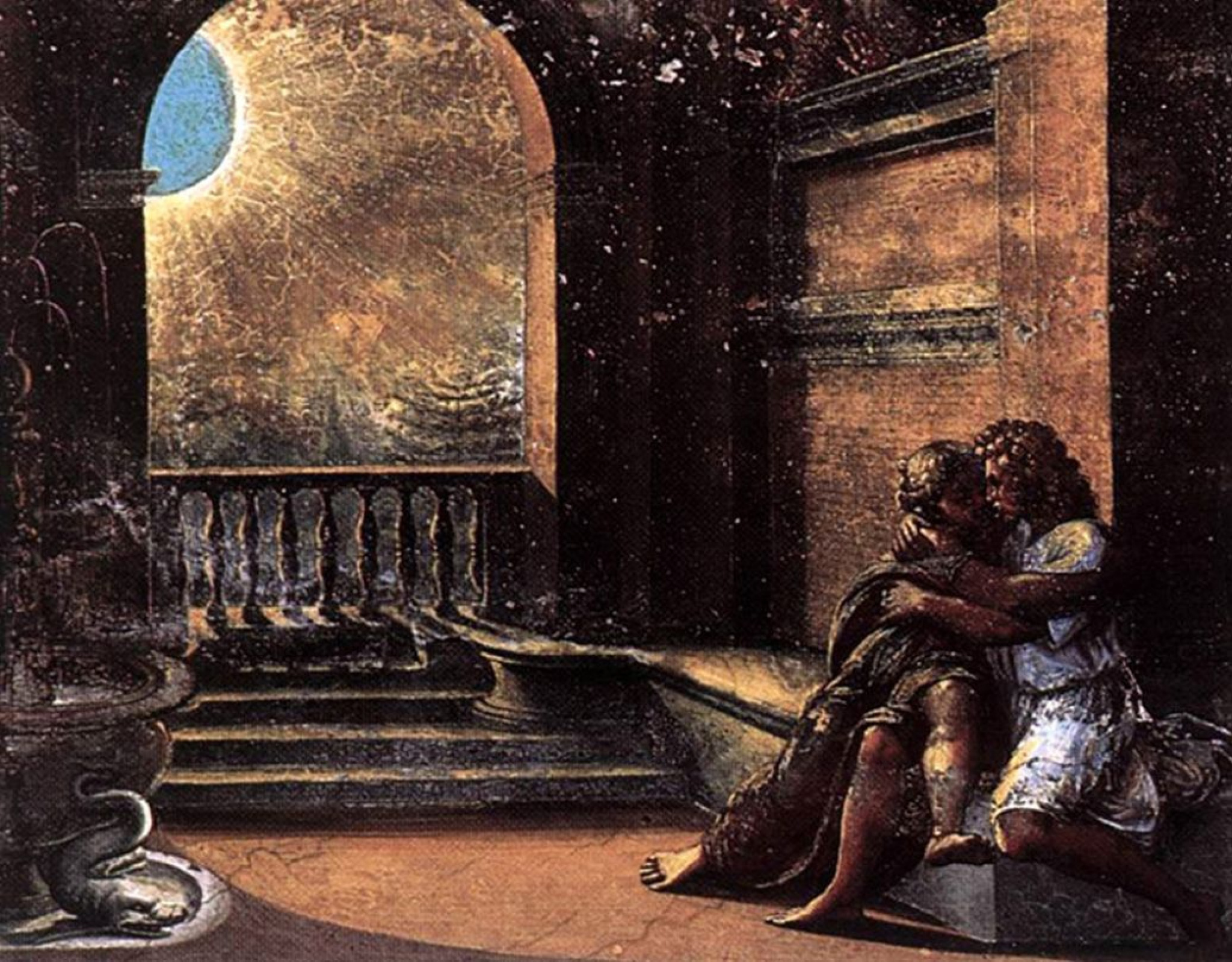
During an eclipse, the brief loss of daylight can activate the primal responses associated with the reptilian brain, evoking an instinctual sense of disconnection from the Source and an urgent drive for survival. On a psychological level, this temporary “darkness” creates a space for buried fears to surface. Insecurities that an individual has avoided or pushed “under the rug” can re-emerge, as the organism subconsciously interprets the momentary dimming of light as a potential threat.
This, in turn, influences the limbic system (the center of emotion, memory, social bonding, and instinctive responses). As a result, intense behaviors, abrupt reactions, and emotional extremes may be triggered. It is no coincidence that, on a collective level, sudden or significant financial fluctuations, such as shifts in stock markets or cryptocurrencies are often observed during eclipse periods, as people tend to act more impulsively and are easily swayed.
Humanity no longer needs to operate exclusively from those brain regions rooted in our prehistoric past. The third part, the neocortex, governs logic, imagination, complex thought, ethics, mathematics, and self-awareness. Thanks to this higher function, we can approach any situation with clarity and detachment, transforming it into an opportunity for psychological insight and growth.
For the seeker of Truth who understands that solutions arise from within, an eclipse is no longer a shocking event but a catalyst for rapid spiritual evolution. It exposes what has been left unresolved. It offers the chance to illuminate a forgotten aspect of life. It encourages one to take responsibility and strengthen spiritual “muscles” that may have been neglected.
As we enter a period of eclipses, it is important to keep the above in mind. If the planetary geometry of our natal chart is touched by the degrees of the eclipses, we are offered a gift of awakening—a signal that a certain situation is reaching its conclusion, its light fading, and that space is being created for something new to emerge with immediate return.
The question is whether we will allow ourselves to complete this process. Will we transmute the unconscious into conscious awareness, walking forward on the path of our incarnation, or will we hide the king within, placing a mask in his stead until the “difficult” period passes?